
The Science Behind Language Learning
“I understand almost everything, but when it’s my turn to speak… my mind goes blank.”
If you’ve ever learned a foreign language, chances are you’ve said this at least once. It is one of the most common frustrations among language learners, regardless of age or proficiency level.
So why does this happen? Why can we understand a language but struggle to speak it?
Applied linguistics provides the answer.
But first, we need to normalize this experience. Feeling “stuck” is not a sign that you are failing—it is a perfectly natural stage of language acquisition. With the right guidance and consistent practice, every learner can overcome this plateau and gradually regain confidence.
The Four Language Skills
How does the human brain learn a new language?
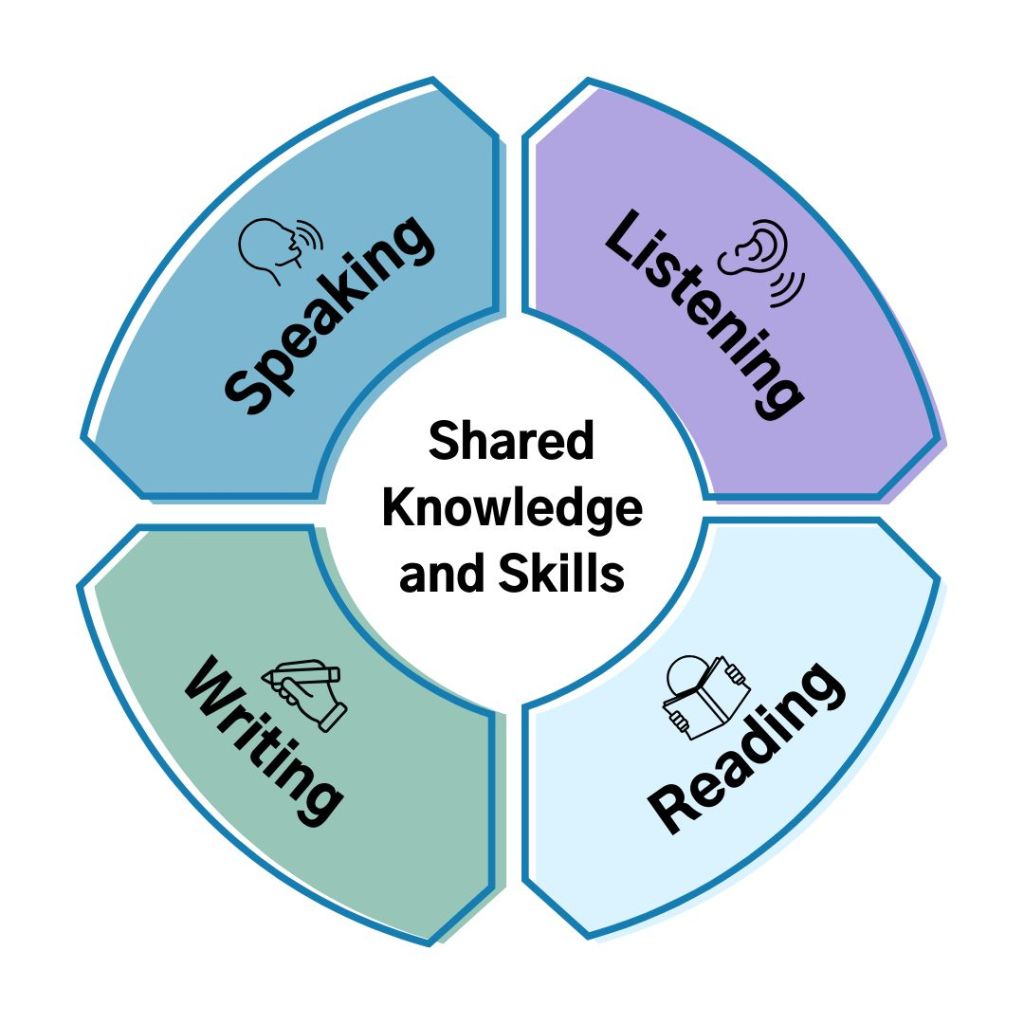
Language learning is built upon four fundamental skills, which are divided into two categories.
Α. Receptive Skills (passive learning)
These involve understanding language rather than producing it.
1. Listening
Learners gradually recognize sounds, pronunciation, intonation and rhythm while connecting what they hear to meaning.
2. Reading
Learners recognize written symbols, words and grammatical patterns before developing the ability to understand increasingly complex texts.
B. Productive Skills (active learning)
These require learners to actively produce language.
3. Writing
Writing allows learners to organize their thoughts, choose appropriate vocabulary and grammar, revise their work and express ideas in a structured way.
4. Speaking
Speaking is arguably the most demanding skill. Learners must retrieve vocabulary, apply grammar, pronounce words correctly and respond almost instantly while participating in real conversations.
Sound familiar?
Exactly. These are the four sections assessed in most language exams.
However, many learners devote the majority of their study time to grammar exercises and vocabulary lists while neglecting writing and speaking practice. Even in the classroom, teachers may focus primarily on completing the textbook, leaving little room for genuine communication.
What Happens Inside the Brain When We Speak?
Speaking a language is a much more complex process than simply understanding it. When we listen, our brain mainly focuses on recognizing sounds, identifying words and connecting them with meaning. However, when we speak, multiple processes need to happen almost simultaneously: we have to organize our thoughts, search for the right words, apply grammar rules, pronounce sounds correctly and respond within a limited amount of time.
This is why many learners experience the famous “I know this word, but I can’t remember it right now” moment. The knowledge is already stored in their brain, but it has not yet become automatic. With continuous exposure and practice, the brain gradually strengthens these connections, making vocabulary retrieval faster and speech more natural.
Language Is More Than Grammar
Learning a language should never feel like completing a checklist.
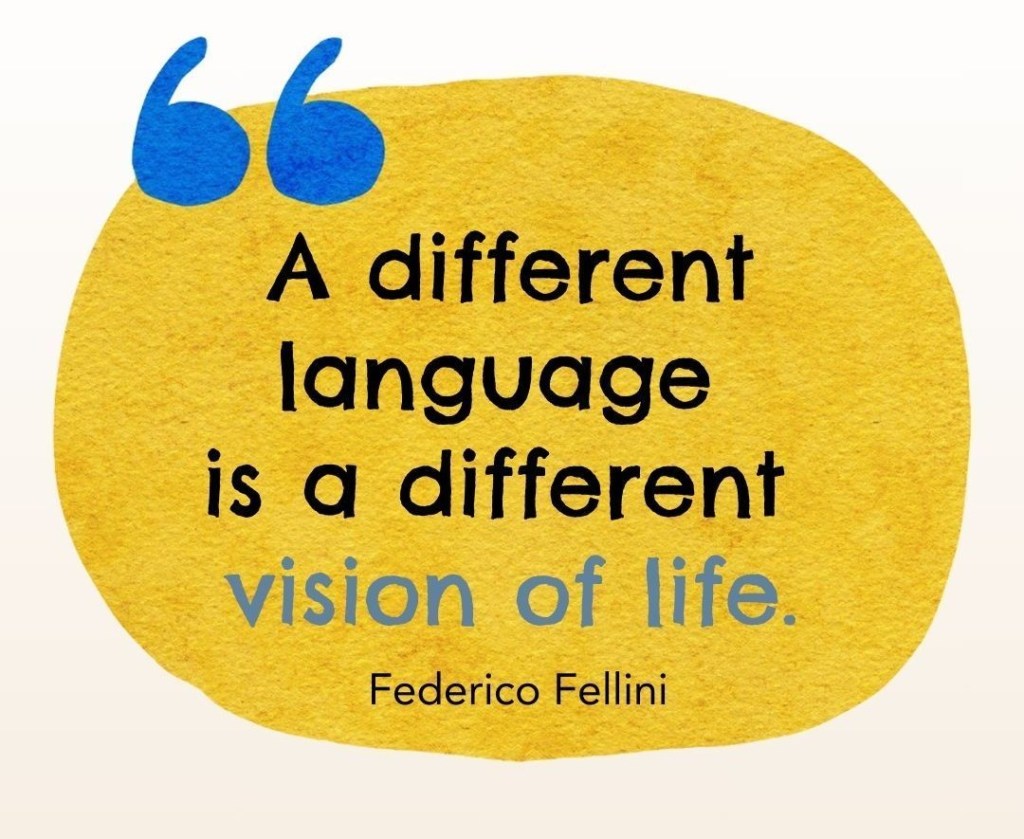
A language is much more than grammar rules and vocabulary lists. Every language carries its own culture, history, traditions and unique way of interpreting the world.
Have you ever noticed that people around the globe talk about the same everyday topics, yet every language expresses them differently?
Learning another language is not simply learning new words. It is learning to see the world through a different perspective.
That is where the real beauty of language learning lies.
For this reason, maintaining a healthy balance between all four language skills is essential.
Completing grammar exercises is certainly important. However, it is equally valuable to spend an entire lesson simply having a conversation with your teacher in the target language.
During the conversation, the focus should be communication rather than perfection. Instead of interrupting every mistake, allow the learner to finish expressing their thoughts. Once the conversation ends, the teacher can review recurring errors, explain them and guide the learner toward more natural language use.
This approach helps learners build confidence, communicate more freely and remember corrections much more effectively.
Language Learning Doesn’t End in the Classroom
Class time alone is rarely enough to achieve fluency.
To truly master a language, it needs to become part of your everyday life.
Watching films, TV series or YouTube videos, listening to podcasts or music, reading books or articles, and even following social media accounts in your target language expose you to authentic language in meaningful contexts.
Without even realizing it, you begin to absorb new vocabulary, expressions, sentence structures and pronunciation patterns while simply enjoying content you already like.
In many cases, this type of exposure is just as valuable as traditional studying.
The Stages of Language Acquisition
Interestingly, second-language learners follow a process that closely resembles the stages through which children acquire their first language.
1. Silent (Pre-production) Stage
Learners mainly observe and listen. They are collecting linguistic input but are not yet ready to produce speech.
2. Early Production
Learners begin producing isolated words and short phrases while relying heavily on familiar vocabulary.
3. Speech Emergence
Simple conversations become possible. Learners can create complete sentences, although mistakes remain common. Their listening and reading comprehension usually develops much faster than their speaking ability during this stage.
4. Intermediate and Advanced Fluency
Learners become increasingly capable of discussing abstract topics, expressing opinions, writing coherent texts and participating in spontaneous conversations using more complex grammatical structures.
Final Thoughts
If you understand much more than you can speak, don’t worry—you are not doing anything wrong.
Understanding and speaking are different cognitive processes, and they do not develop at exactly the same pace.
The gap between comprehension and production is one of the most natural stages of language acquisition.
Keep listening. Keep reading. Keep speaking, even when it feels uncomfortable.
One day, you’ll realize that your mind no longer goes blank—and the words you’ve been collecting all along will finally begin to flow.
FIND ME ON SOCIAL MEDIA
LinkedIn: Elpida Kolovou
Instagram: Elpida Kolovou
 nentorium